Essential guide · Base level · 8 min
Toxic plants and mushrooms: how to prevent poisoning and what to do
Portugal's most dangerous plants grow in gardens and on verges. What to do if someone eats a suspect plant or mushroom, why you don't induce vomiting, and the myths that still kill — following INEM.

In 30 seconds
The essentials, in four points.
is INEM's Poison Information Centre in Portugal: free, 24 hours a day, staffed by doctors. If the person doesn't respond, isn't breathing properly or is having seizures, call 112.
make them vomit. If there's anything left in their mouth, ask them to spit it out. Then follow the Poison Centre's instructions.
the plant, berries or mushroom — at least one specimen of each species eaten — and take a photo. It helps doctors know what it was.
With mushrooms, symptoms that start 6 hours or more after eating are the most dangerous. Don't wait for symptoms: call straight away.
The most dangerous plants are in gardens, not the jungle.
Oleander decorates gardens, roundabouts and riverbanks across Portugal. Foxglove grows wild on verges and in woodland. Castor oil plants spring up on waste ground. And in autumn, many people pick mushrooms in the countryside. Small children put everything in their mouths, and some adults trust too much in what they think they know.
The good news: Portugal has a free service, with doctors available 24 hours a day, that tells you exactly what to do. This guide helps you not to need it — and to use it well if you do.
A child ate leaves or berries
Remove what's left in their mouth, keep the plant and call 800 250 250. Don't wait for symptoms.
Someone ate foraged mushrooms
Even without symptoms, if there's doubt about the species: keep a specimen and call the Poison Centre straight away.
Sap on skin or in the eyes
Rinse with plenty of running water. If the eyes stay irritated or the skin blisters, call 800 250 250.
Out of the mouth. Call. Keep the evidence.
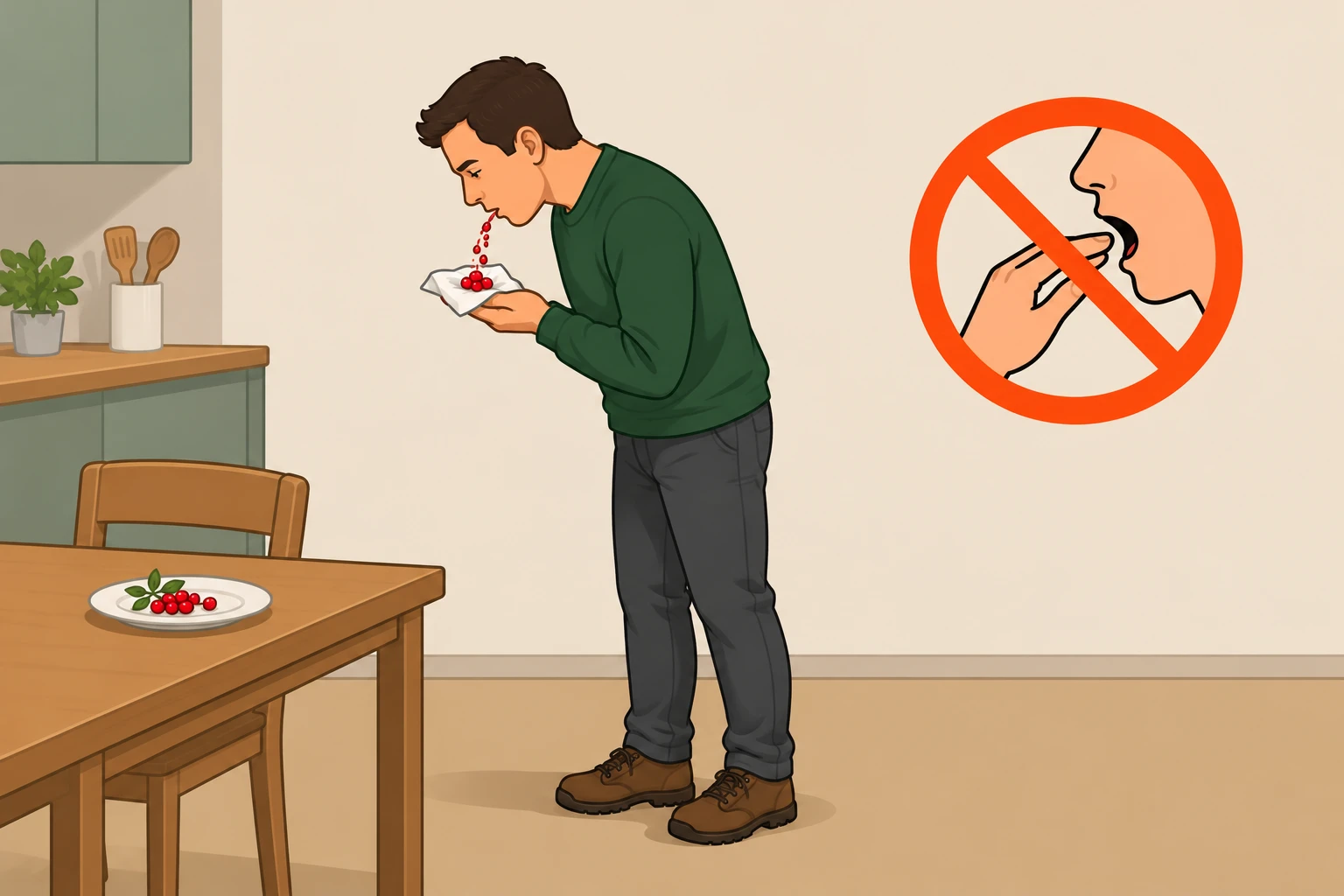
Out of the mouth
If there's anything left in their mouth, ask them to spit it out. Don't make them vomit. If they vomit on their own, lean them forward.
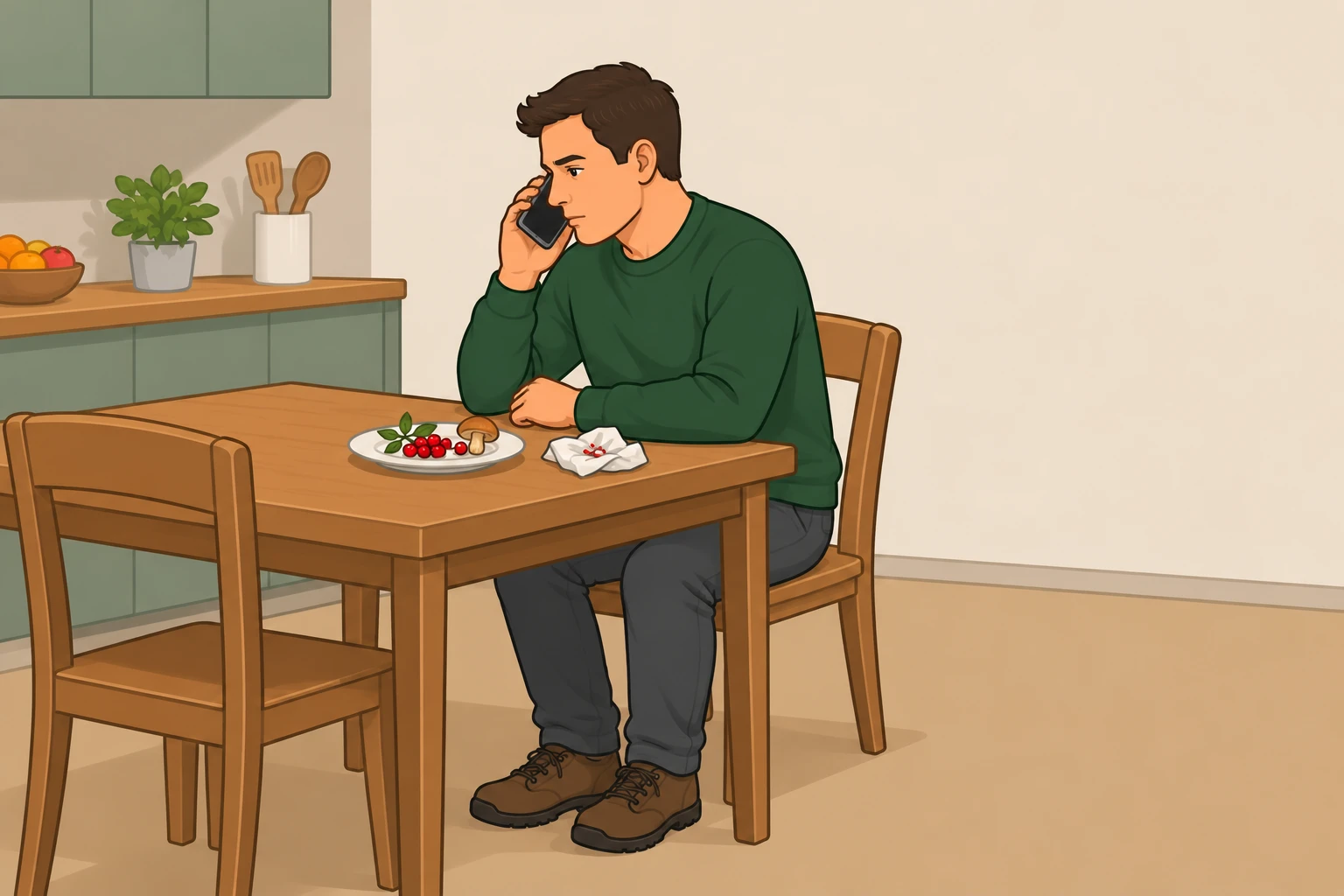
Call
800 250 250, the Poison Information Centre. Give their age and approximate weight, what was eaten, how much and how long ago.
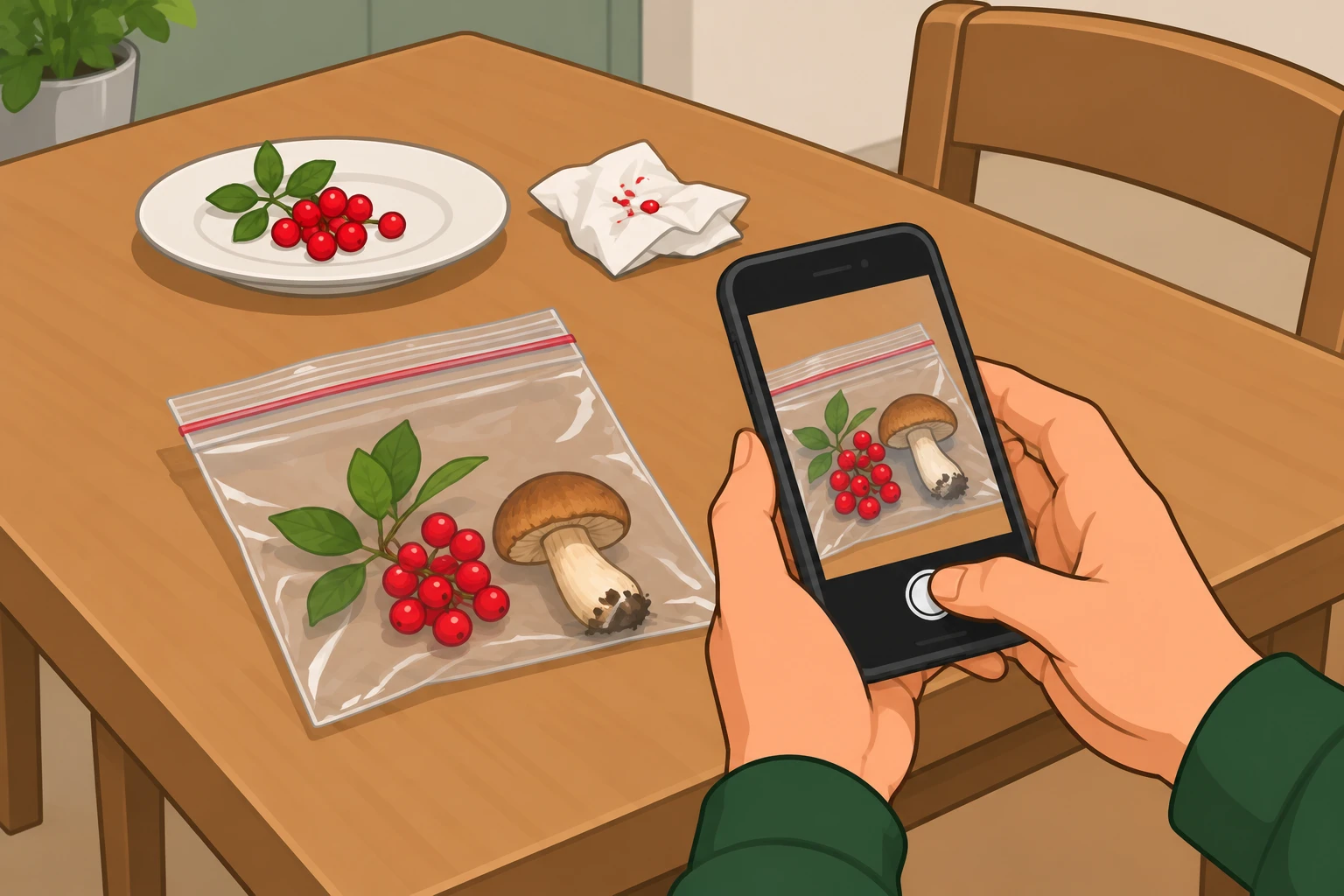
Keep the evidence
The plant, berries or mushroom — one specimen of each species — in a bag, and a photo. Take everything if you go to hospital.
Not responding, not breathing normally, or having seizures?
Vomiting, diarrhoea, pain, confusion or a racing heart?
They're fine, but ate a plant or mushroom you don't know?
Know the names. You don't need more.
You don't need to be able to identify every plant. You need to know which plants you have at home and in the garden, and teach children not to eat anything that doesn't come from the kitchen. These are some of the most dangerous that grow in Portugal:
Oleander
The whole plant is toxic. It contains digitalis-like substances that affect the heart: vomiting, diarrhoea, confusion, irregular heartbeat.
Foxglove
Clusters of thimble-shaped flowers. The same heart effects as oleander. Small amounts can be serious.
Hemlock
Symptoms can start within 15 minutes: dry mouth, racing heart, tremors, sweating, seizures.
Jimsonweed
Known in Portugal as figueira-do-inferno. Fever, hallucinations and seizures. Very dangerous.
Castor oil plant
The seeds contain ricin, a very potent poison. Severe vomiting and diarrhoea, seizures. There's no antidote.
Yew
Hedges and ornamental trees. Causes digestive problems and, rarely, seizures, heart rhythm problems and coma.
If in doubt, don't pick it. If in doubt, don't eat it.
Don't pick or cook mushrooms you can't tell apart with certainty. It's INEM's first rule. Even experts can be wrong, because some deadly species look very like edible ones.
The death cap (Amanita phalloides) is the most dangerous: it causes the vast majority of mushroom deaths. First symptoms appear 6 to 12 hours later, seem to pass, and days later liver and kidney failure set in.
Late symptoms are a warning sign. As a rule, mushrooms that cause symptoms within 2 hours are less dangerous than those that cause them 6 hours or more later. But there are exceptions: always call.
If you ate wild mushrooms, keep a specimen of each species — raw or cooked — until you're sure nobody is unwell.
Don't wait for symptoms. If there's doubt about what was eaten, call 800 250 250 straight away.
Know the name, keep it out of reach, teach.
Know the names of the plants in your home and garden. If you don't, ask at a garden centre or photograph them. In an emergency, the name saves time.
Keep toxic plants away from small children — and pets. Pick up fallen berries and seeds.
Teach children: nothing from the garden, park or countryside gets eaten without asking an adult.
Wash your hands after pruning or handling toxic plants, before eating or touching your eyes.
Save 800 250 250 in your contacts for the whole family, and stick it by the home phone.
Plant and mushroom myths — and what to do instead.
“Poisonous mushrooms are brightly coloured.”
Some of the most dangerous are white or dull in colour.
“If animals eat it, it's safe.”
A poison may not harm slugs, insects or other animals and still kill a person.
“A poisonous mushroom turns silver or onion black.”
All mushrooms can darken as they wilt or are damaged. There's no home test.
“If it tastes good, it isn't poisonous.”
Some toxic mushrooms taste pleasant.
“Cooked well enough, any mushroom is safe.”
Cooking, freezing, drying or canning doesn't remove the poison.
“Making them vomit helps get the poison out.”
Don't induce vomiting. Call 800 250 250 and follow their advice.
Print it. Stick it by the phone.
Stick it by the home phone and write down the names of the plants in your home and garden.
- INEM — 800 250 250: calls to the Poison Information Centre become free (in Portuguese) — number, 24 h, free
- INEM — What to do in case of poisoning by ingestion (in Portuguese) — don't induce vomiting, spit out, sips of water or milk
- INEM — Mushroom poisoning: advice from the Poison Centre (in Portuguese) — symptoms at 2 and 6 hours, keep a specimen, don't pick without certainty
- MSD Manual — Mushroom poisoning (professional, in Portuguese) — Amanita phalloides, 6–12 h, liver and kidney failure
- MSD Manual — Poisoning by plants and shrubs (in Portuguese) — oleander, foxglove, hemlock, jimsonweed, castor oil plant, yew, dieffenbachia, poinsettia
- Blue Ridge Poison Center (University of Virginia) — Wild mushrooms — myths: colour, animals, silver, taste, cooking
- Flora-On — Interactive flora of Portugal (Portuguese Botanical Society) — species distribution in Portugal
Reviewed 5 Nov 2026 · Next review: Mar 2027 · Spotted a mistake? Tell us.
This guide is not for identifying plants or mushrooms. In case of poisoning in Portugal, call 800 250 250 (Poison Information Centre) or 112.