ÁguaSecção 02
Jerricã alimentar 20 L com torneira
Why: para a reserva de água de casa: plástico próprio para alimentos e torneira para servir sem contaminar.
Essential guide · Base level · 8 min
How much water and food to store, how to build and rotate your supplies without waste, and what to keep in the car and at work to get home.

The essentials, in four points.
is the minimum the European Commission and Portugal's civil protection authority (ANEPC) recommend keeping at home: water, food and the essentials to live without power, mains water or shops.
of water per person, at least — at 4 L a day, it lasts 5 days. For a family of 4, that's 80 litres. See the Water guide.
Eat what you already eat and replace what you use: oldest out first. That way your supplies never go out of date.
Keep the car's fuel tank above half at all times. In a crisis, fuel pumps stop or run dry.
A grab bag is for leaving. But in most emergencies — blackouts, storms, cut-off roads, illness at home — the authorities' advice is to stay. And staying at home without electricity, mains water or open shops is only calm for those who prepared beforehand.
Since 2025 the European Commission has recommended that every household be self-sufficient for at least 72 hours. ANEPC asks households to keep a supply of water and tinned food for two or three days, and a fire extinguisher.
No fridge, electric hob, cash machines or fuel pumps. See the Blackout guide.
Roads closed by floods, snow or wildfires. Local shops may go days without restocking.
When someone falls ill and you can't go out, an organised store cupboard avoids trips and infections.
| People at home | Water (L) | Meals (3 days) |
|---|---|---|
| 1 person | 20 | 9 |
| 2 people | 40 | 18 |
| 3 people | 60 | 27 |
| 4 people | 80 | 36 |
| 5 people | 100 | 45 |
Water: at least 20 L per person — about 4 L a day (2 for drinking, 2 for cooking and hygiene). Meals: three a day, needing no fridge. Add food for your pets.
Eaten cold, or just heated: tinned fish, meat, beans and chickpeas, ready soups, crispbreads, crackers, nuts, cereal bars, jam, UHT milk and plant drinks.
Ring-pull tins or a manual tin opener kept with the supplies. Without one, half the cupboard is useless.
Think of special needs: formula and baby food, gluten-free or diabetic diets, pet food.
Rice and pasta only if you can cook them: they need water and fuel. They count, but don't replace food you can eat without cooking.
Small comforts matter: coffee or tea, sugar, salt, chocolate. On a hard day they make a real difference to a family's morale.
| Food | Lasts | Note |
|---|---|---|
| Tinned fish, meat and vegetables | 2 to 5 years | Cool, dry place |
| Tinned tomatoes and fruit | 12 to 18 months | More acidic: shorter life |
| Sealed bottled water | Label date | Away from sun and chemicals |
| Stored tap water | 6 months | See the Water guide |
For undamaged tins kept in a cool, dry place, according to the US Department of Agriculture (USDA). Always follow the label date.

On every shopping trip, pick up two or three extra things for the supplies. In a month it's done, without straining the budget — and without panic-buying when warnings come.

In a cool, dry, dark place, away from fuel and cleaning products. Write the expiry date on the front of each pack in large letters.

Newest to the back, oldest to the front. Use what's close to expiry in everyday cooking and replace it straight away.
Is the tin bulging, leaking, rusty or deeply dented?
Is it past its date?
Is it less than 3 months from its date?
Torches for everyone, spare batteries, a battery or wind-up radio and charged power banks.
Camping stove and cartridges, used outdoors or by an open window. Matches or a lighter.
Daily medicines for at least a week, first-aid kit, thermometer, painkillers.
Wipes, hand gel, strong bin bags, toilet paper, plain bleach for disinfecting.
ANEPC recommends keeping a fire extinguisher at home. Check its date and show the whole family how to use it.
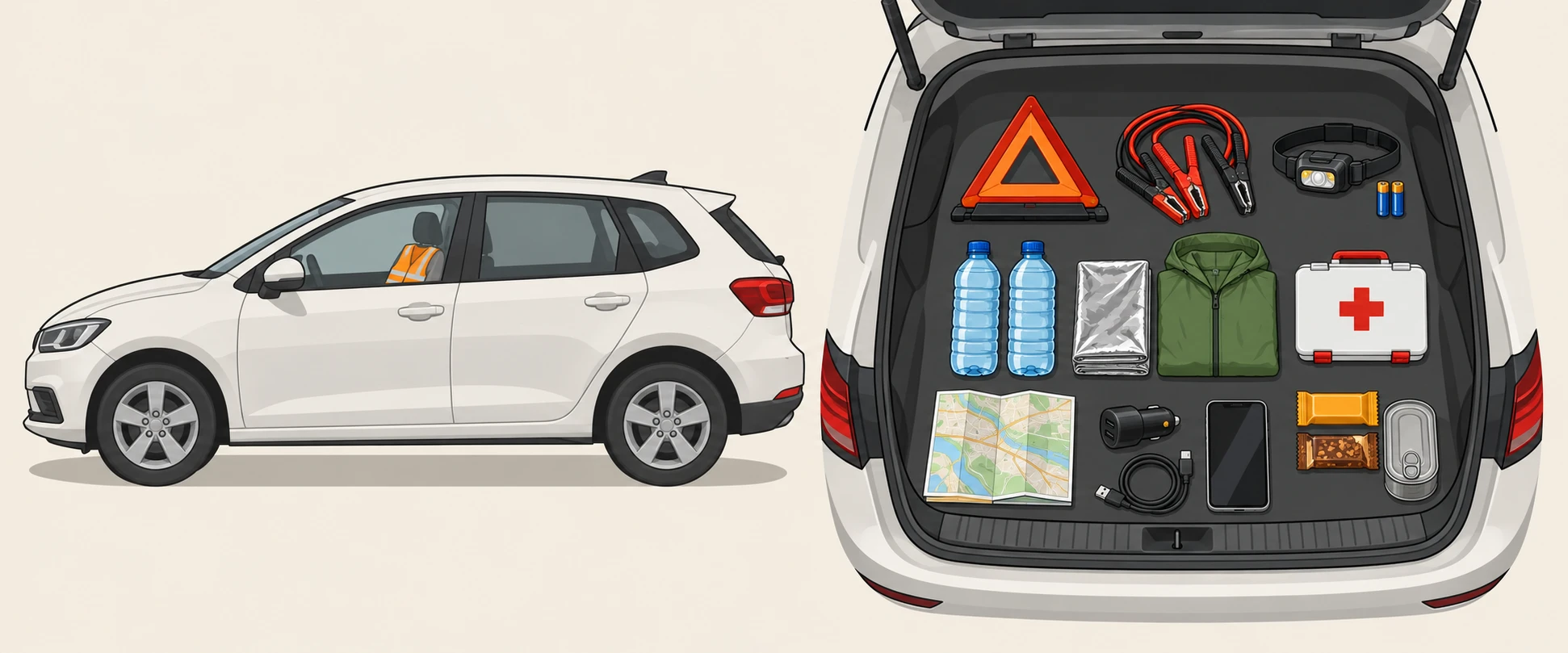
Required by law: a warning triangle and an approved reflective vest. Keep the vest inside the car, within reach: you put it on before you get out.
For the car: jump leads or a portable jump starter, a car phone charger, a torch, a spare tyre in good condition.
For you: water, bars or nuts, a blanket, a waterproof jacket, comfortable shoes and a small first-aid kit.
To find your way: a paper road map. Without signal, phone navigation may stop working.
At work: a small 24-hour supply in a drawer — water, a snack, medicines, a torch, a power bank and shoes for walking.
“I'll buy everything when there's a warning.”
When warnings come, shelves empty in hours and latecomers get nothing. Buy gradually, calmly.
“Tinned food lasts forever.”
It lasts a long time, but it has a date, and damaged tins are dangerous. Rotate and check twice a year.
“With rice and pasta, the family is covered.”
Without water and gas you can't cook them. Secure food you can eat cold or just heated first.
“Bottles of tap water last for years.”
Stored tap water should be replaced every 6 months. Sealed bottled water lasts until the label date.
“I need a generator to be prepared.”
For 72 hours, torches, a radio and power banks are enough. A misused generator can kill with carbon monoxide.
“Home supplies are for a war scenario.”
They're for the next blackout, the next storm or the next flu that keeps you home. These happen every year.
Your supplies are mostly built at the supermarket, with what your family already eats. These items store water, open and cook food without electricity and deal with what can go wrong at home and in the car.
Amazon.es affiliate links. If you buy through them, K72+ earns a small commission at no extra cost to you. Learn more
Why: para a reserva de água de casa: plástico próprio para alimentos e torneira para servir sem contaminar.
Why: sem ele, metade da despensa fica fechada. Guarda-o junto à reserva.
Why: arrumam a reserva à vista, protegida da humidade e dos bichos, e facilitam a rotação.
Why: para aquecer comida sem eletricidade — sempre ao ar livre ou junto a uma janela aberta.
Why: a ANEPC recomenda ter um em casa. Verifica a validade e aprende a usá-lo.
Why: põe o carro a trabalhar sem ajuda de outro carro, e muitos também carregam o telemóvel.
Stick this sheet on the store-cupboard door. Use it at your six-monthly check.
Reviewed 5 Nov 2026 · Next review: Mar 2027 · Spotted a mistake? Tell us.
This guide does not replace instructions from the authorities. In an emergency, call 112.