AcenderSecção 04
Pederneira (ferrocério)
Why: acende com faíscas mesmo molhada. Leva-a junto com isqueiro e fósforos.
Essential guide · Base level · 7 min
Before lighting, the law: at «very high» or «maximum» fire danger, no fire at all in Portugal's rural areas. Then the safe site, the three layers of fuel and how to put it out for good — drown, stir, feel.

The essentials, in four points.
In Portugal, any kind of fire in rural areas is forbidden when the municipality's wildfire danger is «very high» or «maximum». Always check IPMA before lighting.
diameter of cleared ground around the fire, and at least 4.5 m from tents, scrub and low branches. Water and a shovel always to hand.
Prepare everything before lighting: tinder, thin kindling, thicker kindling, fuel wood. Thick wood only goes on once the fire is established.
To put it out: drown with water, stir, drown again and feel with the back of your hand. If it's still hot, you can't leave.
Fire is one of the oldest and most useful outdoor skills. It's also one of the most dangerous in a country with hot, dry summers and a lot of scrubland. So this guide starts with the most important question — can I make a fire here, today? — and only then shows how to light it and put it out properly.
What to do if there's a wildfire near you is in the Wildfire guide, in the Emergencies module.
Is the municipality's rural fire danger «very high» or «maximum»?
Are you in a protected area or somewhere fire is banned?
Is it windy, is there dry scrub around, or do you have no water to put it out?
Use an existing fire site (a stone ring or a picnic-park fireplace) whenever there is one.
Clear a circle 3 m across: down to bare earth, with no leaves, pine needles, grass or dry roots.
Stay at least 4.5 m away from tents, scrub and branches. Overhead, leave clear space of at least three times the height of the flames.
Water and shovel before lighting, not after. And someone always watching, especially with children and pets around.
Keep the fire small. A small fire warms and cooks just as well, and is much easier to control.
Prepare everything before lighting: a good handful of tinder, twice as much kindling as you think you'll need, and fuel wood ready beside you. A flame with nothing to feed it dies in seconds.
Everything must be dry. Dead wood still attached to trees is usually drier than wood on the ground. Splitting a wet stick reveals the dry inside.
Carry more than one way to light it: a lighter, waterproof matches and a ferrocerium rod, kept in a dry bag.
Shield the small flame from the wind with your body, and give it air: too much wood on top smothers the fire.
Only then, the fuel: a little at a time, as the fire can take it.
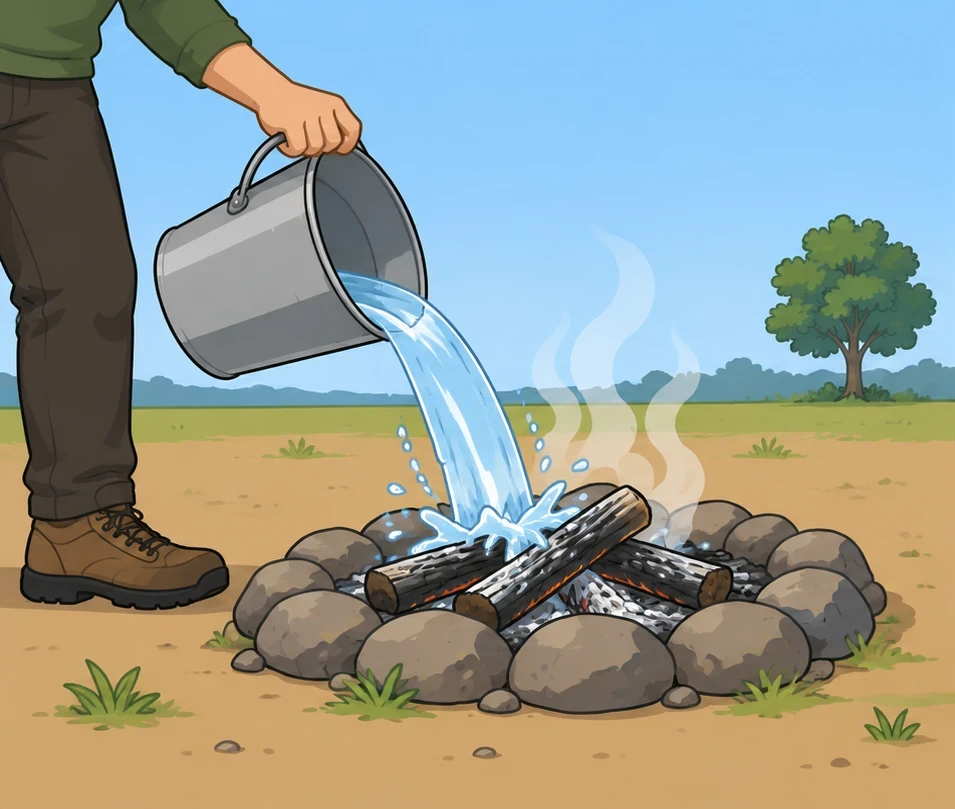
Pour plenty of water on the embers until the hissing stops.
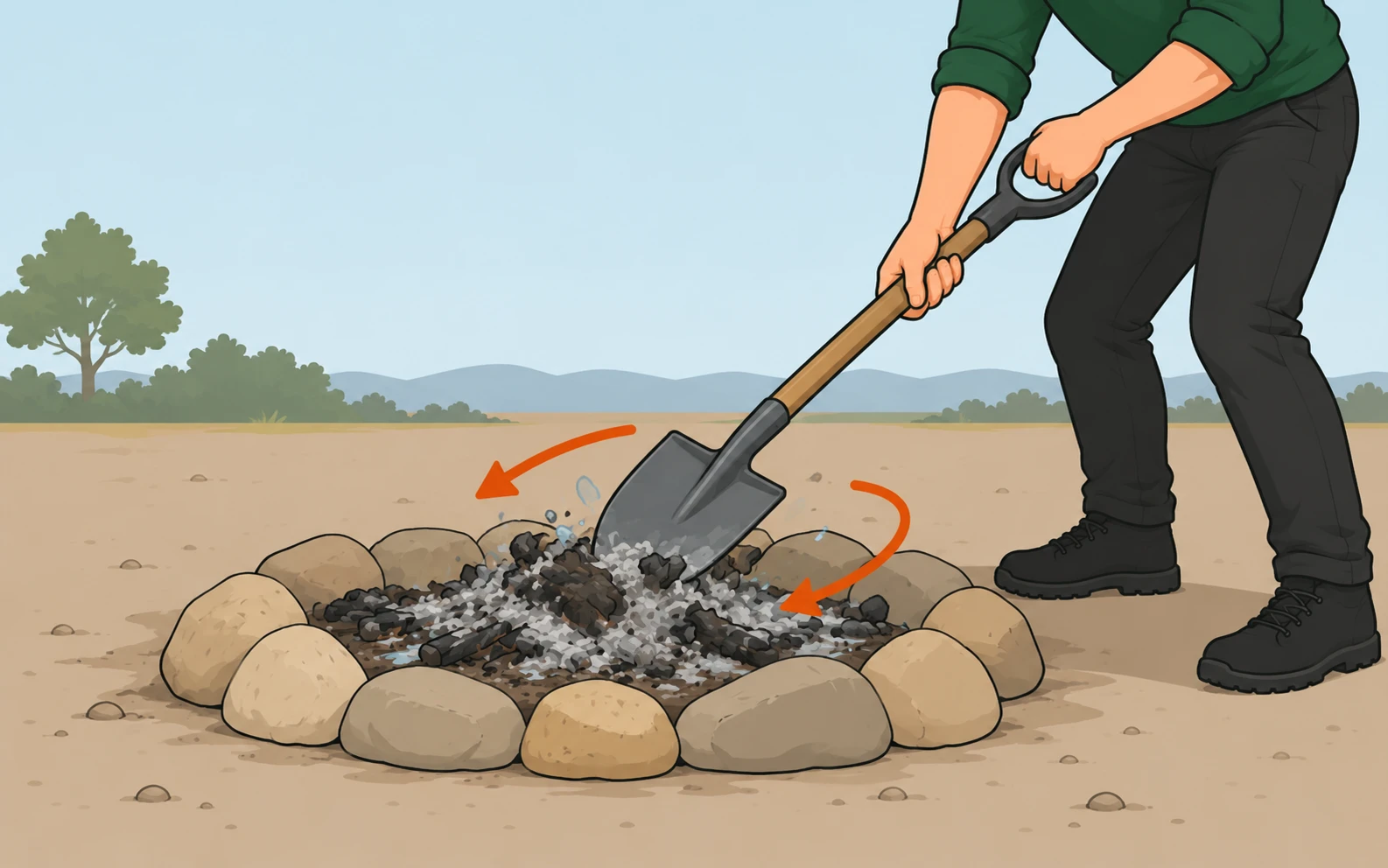
With the shovel, mix the water into the ash, earth and embers. Scrape half-burnt sticks. Pour on more water.
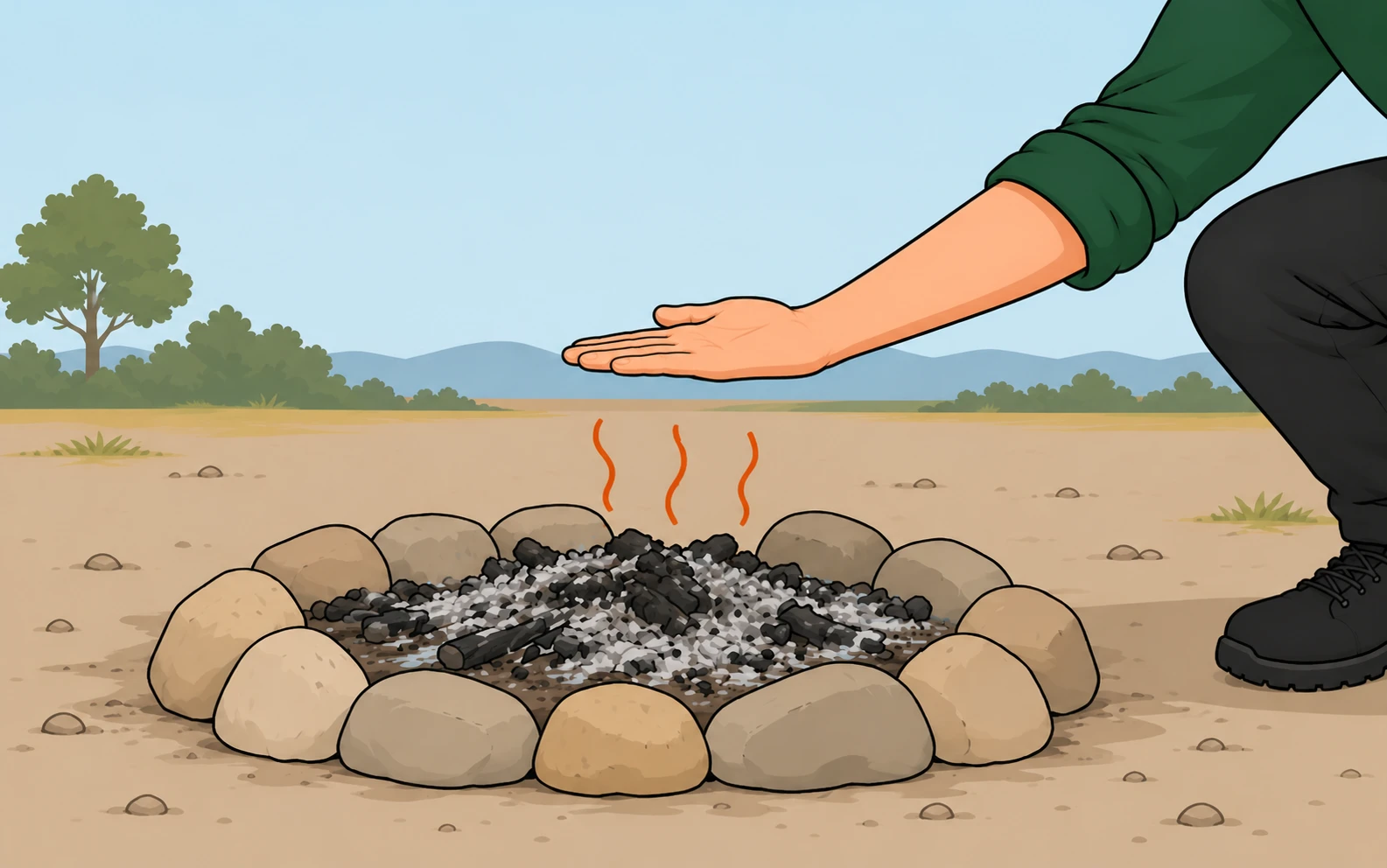
Hold the back of your hand near the ashes, without touching. If you feel heat, repeat. If it's too hot to touch, it's too hot to leave.
“A small fire can't do any harm.”
One spark can start a wildfire. At «very high» or «maximum» danger, any kind of fire in rural areas is banned.
“Covering it with earth is enough.”
Embers can smoulder underneath for hours. Drown with water, stir and feel.
“Leave the fire to burn itself out.”
Never leave while the fire is lit or the ashes are warm.
“The more wood, the better it catches.”
Too much wood smothers the flame. Thinnest to thickest, a little at a time.
“A stove inside the tent warms the night.”
It produces carbon monoxide, which kills without a smell. Stay warm with clothing and a sleeping bag.
“In an emergency, I'll make fire by friction.”
Carry a lighter and matches. Friction is practised, not improvised.
More than one way to light a fire, kept dry, and always a way to put it out. For cooking, a camping stove is safer than an open fire.
Amazon.es affiliate links. If you buy through them, K72+ earns a small commission at no extra cost to you. Learn more
Why: acende com faíscas mesmo molhada. Leva-a junto com isqueiro e fósforos.
Why: acendem com vento e depois de molhados. Guarda-os num saco estanque.
Why: mais seguro do que uma fogueira para cozinhar, sempre ao ar livre.
Why: para limpar o local e mexer as cinzas ao apagar.
Why: mantém a isca e os fósforos secos.
Keep it with your stove and camping gear.
Reviewed 5 Nov 2026 · Next review: Mar 2027 · Spotted a mistake? Tell us.
This guide does not replace local rules or official instructions. If you see a wildfire in Portugal, call 112.